At one time, Michelle, a Jewish believer in Jesus, and I attended the same church. Twice I planned to attend the Passover Seder she hosted. Twice, circumstances beyond my control thwarted my plans. Then I left the church and lost touch with Michelle’s ministry.
When a friend gave me a flyer announcing a Passover Seder sponsored by CJF Ministries at the Metairie Sheraton, I recognized the name of the New Orleans representative hosting the Seder. I contacted Michelle and offered to write an article about the upcoming event. She accepted and agreed to tell me about her spiritual journey to faith in Jesus.
Michelle’s journey began when her family survived the Holocaust.
“Some people have the notion that you are only a Holocaust survivor if you survived the camps,” said Michelle. “The accurate definition is someone who came out alive after the experience.”
Aaron and Sarah, Michelle’s maternal grandparents, applied for visas to come to America shortly after Hitler became chancellor of Germany. At the time, immigration to America was limited by quotas. If the quota had been met, immigrants needed a sponsor to deposit $1,500 in an American bank to guarantee that they would never go on welfare.
Aaron and Sarah searched in vain for a sponsor as persecution increased. Jewish businesses were boycotted. Jews were denied health insurance. The Nuremberg Laws stripped them of citizenship and forbade them to marry non-Jews.
The Gestapo came to arrest Aaron twice. The first time, a member of the Stuttgart police warned Aaron that the Gestapo were coming, but if he feigned illness, they would not arrest him. The second time, Aaron hid inside a neighbor’s trunk for three days. The neighbor did not have room for Steven, Aaron’s son, who fled by jumping from rooftop to rooftop until he reached a cousin’s house. The cousin had already been arrested. Knowing the Gestapo would not return, Steven hid in the attic.
“My grandfather was a dermatologist in Germany,” said Michelle. “One of his Gentile patients moved to America and found employment with a wealthy Jewish attorney in Manhattan. She convinced him to sponsor my mother, her parents, and her brother.”
By the time they got visas, Michelle’s mother had been denied an education, and her grandfather could no longer practice medicine. Michelle’s mother was thirteen when she boarded a train bound for Switzerland with her parents. Steven had already been sent to England.
When they arrived at the Swiss border, they were the only family ordered off the train. The German police rifled through their suitcases and even cut up a piece of sausage, searching for hidden jewelry or money. The police waved them back onto the train, and they traveled to England to pick up Steven.
Steven was supposed to stay with a family in the country, but the host family decided he was too much of a burden and did not want him in their house.
“My uncle Steven slept in a barn with animals for two years. When my mother and grandparents arrived, he did not even have a coat to wear,” said Michelle.
Aaron and Sarah rented a thirteen-bedroom apartment on the Upper West Side of Manhattan and opened a nursing home for elderly Jewish women. Sarah operated the nursing home to support the family. Aaron returned to medical school and obtained the necessary credentials to open a medical practice in America.
Michelle’s family on her father’s side lived a privileged life in Berlin. Her grandparents, Shlomo and Ruth, owned two homes staffed with maids, cooks, and a chauffeur. Shlomo worked as a manager of a business supply company until his boss reluctantly asked him to leave. Jewish men were no longer allowed to work in Germany. Shortly after Shlomo lost his job, the Gestapo came to arrest him. Ruth hid her husband in the attic and told the Gestapo they had already arrested him. Her quick-witted action saved his life.
Shlomo and Ruth found a distant relative to sponsor them. They lost everything before they left Germany.
“My grandfather Shlomo worked as a door-to-door peddler, and they lived the rest of their lives in poverty,” said Michelle. “My father did not have money to pay the subway fare, so he walked for miles to attend a vocational high school.”
“Did the experience shake your parents’ faith in God?” I asked Michelle.
“Christians have this idea that Jewish people automatically believe in God and have faith. Judaism is more than a faith. It is a culture, tradition, and history. My family attended a synagogue in New York formed by German Jewish survivors of the Holocaust, but both my parents were agnostic. They never talked about God. None of my family did,” said Michelle.
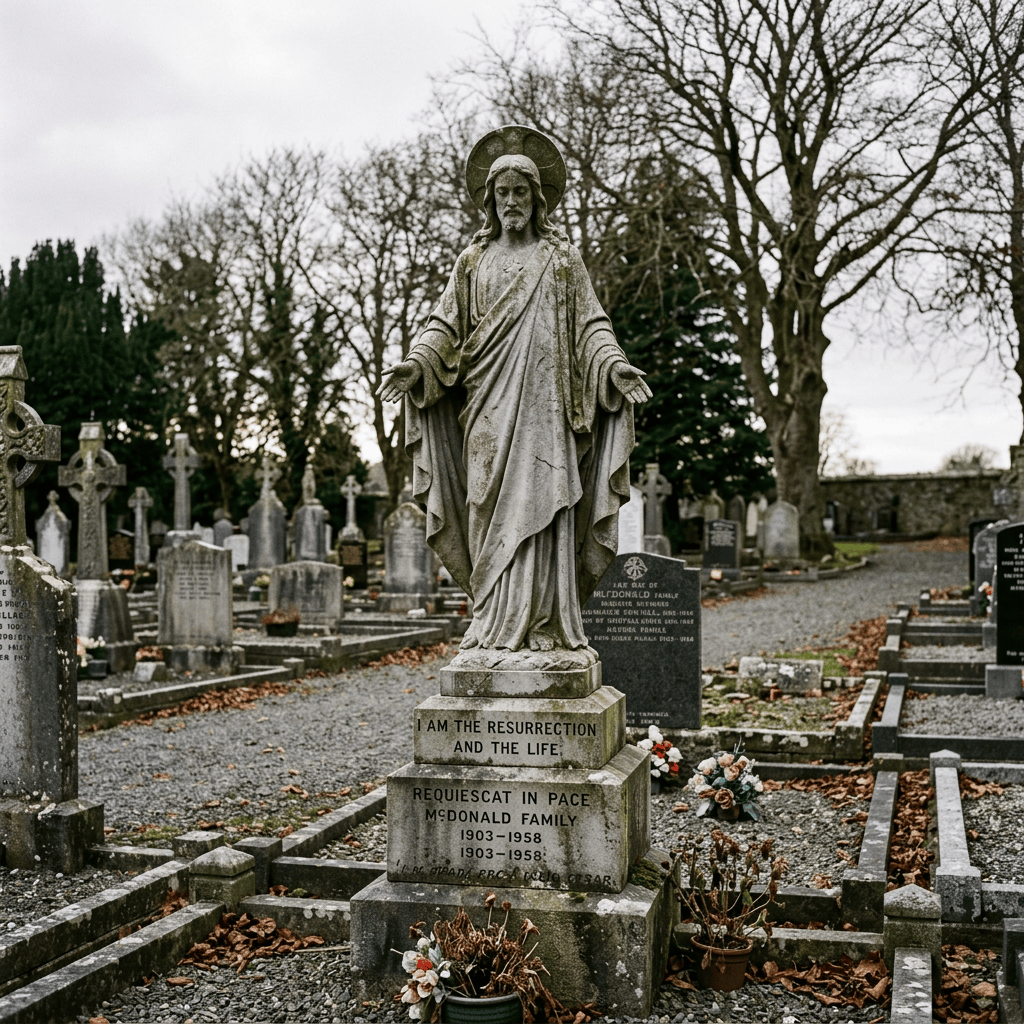
As a child, a statue of Jesus in a Catholic cemetery that her family drove past on their way to synagogue captivated Michelle.
“I was strangely attracted to it. Every time we went to synagogue, I could not wait to see it. No one told me it was a statue of Jesus. I knew it was, and I thought it was beautiful.”
After high school, Cornell University accepted Michelle’s application.
“My lifelong dream was fulfilled, and I did not have any more goals to achieve,” said Michelle. “In my senior year, I became anxious about my future.”
Michelle searched for purpose and meaning by reading everything she could find on spirituality. She dismissed most of what she read as impractical until a friend gave her The Late Great Planet Earth by Hal Lindsey. Lindsey’s book explained God’s plan and purpose for Israel. His arguments that Jesus fulfilled the prophecies about the Messiah were convincing.
“When I finished the book, I prayed for the first time in my life. ‘God, I know You know all things.’” Michelle laughed. “Up to this point in my life, I never thought about God, yet all of a sudden I knew God knew all things. I prayed, ‘I don’t know if I should believe what I’ve read. You’ve got to show me the truth.’ Somehow I was able to trust God would do that, even though I had never trusted him for anything in the past.”
Within three months, Michelle encountered three Christians. First, she met Malaer at the university library. They quickly developed a close friendship.
“What I experienced with Malaer was unconditional love. I’d always dreamed of having a friend who was like a sister because I only had a brother. Malaer became that friend,” said Michelle.
Then a date brought Michelle to a fraternity party where a member of Campus Crusade for Christ shared his faith with them. Michelle felt embarrassed by his intrusion, but she wanted to hear what he was saying.
Later, Michelle noticed a woman in her nutrition class who was full of joy and wondered how someone could be so happy. As they walked to the dorm, Michelle asked her why she was so happy. The woman responded, “I believe in Jesus.” Enraged by her answer, Michelle belittled her for believing a man could heal people.
In December of that year, Malaer and Michelle attended a conference for social workers. During lunch, a stranger sat at their table and shared her faith in Jesus with Michelle. As the woman told her story, Michelle saw Malaer nodding in agreement and felt betrayed.
“Before I could lambaste her like I did the other woman,” said Michelle, “I felt something inside me say, ‘Listen to Malaer. She loves you.’”
Michelle asked Malaer why she agreed with the stranger. Malaer explained that she was raised in a Hindu family in Malaysia, but an aunt who had embraced Jesus as the one true God led her to salvation.
“I believe God sent Malaer halfway around the world to tell this Jewish girl from New York City about the Messiah. I would not have received the message from anyone else. Being a first-generation American child of Holocaust survivors, I felt more comfortable with European culture than American culture. Malaer was from a different culture, and I was very comfortable with her. Before lunch ended, I prayed with Malaer, asking Jesus to come into my heart. Instantly, all the anxiety I had been wrestling with left. I felt at peace with myself and with God. Jewish people say Jesus cannot be the Messiah because he did not bring political peace to earth. He may not have brought political peace, but he brought spiritual peace between God and man.”
Michelle helped me understand Jewish culture, and I’ll never forget how another Jewish friend defended me. Otto had recently joined the secular writers’ critique group I attended. The unbelievers in the group always struggled to maintain a civil composure when they commented on my material. That night, their comments were more contentious than usual. I bit my tongue as some writers expressed harsh opinions about me and Jesus.
Otto commented last. “I’m a Jew, and I don’t believe in Jesus, but this is damn fine material.”
I picked my jaw up off the floor and refrained from laughing as Otto chastised the group for thinking my material was anything less. My Jewish Savior brought peace to the group through a Jew who did not even believe in him. In Michelle’s words, Messiah Jesus “shall be called Pele-joez, El-gibbor, Avi-ad, Sar-shalom: Wonderful Counselor, Mighty God, Everlasting Father, Prince of Peace.”

Leave a Reply